Nutrition and Weight Management
Pet nutrition counselling and weight management in Chilliwack
Weight plans and feeding advice for dogs and cats, from puppyhood to the senior years.
Promontory Animal Hospital provides pet nutrition counselling and weight management for dogs and cats in Chilliwack, and the advice comes from our veterinarians. Every plan starts with an examination, then a target weight and a feeding plan.
- Thomas Road, Chilliwack
- Open 8:00am to 8:00pm, seven days a week
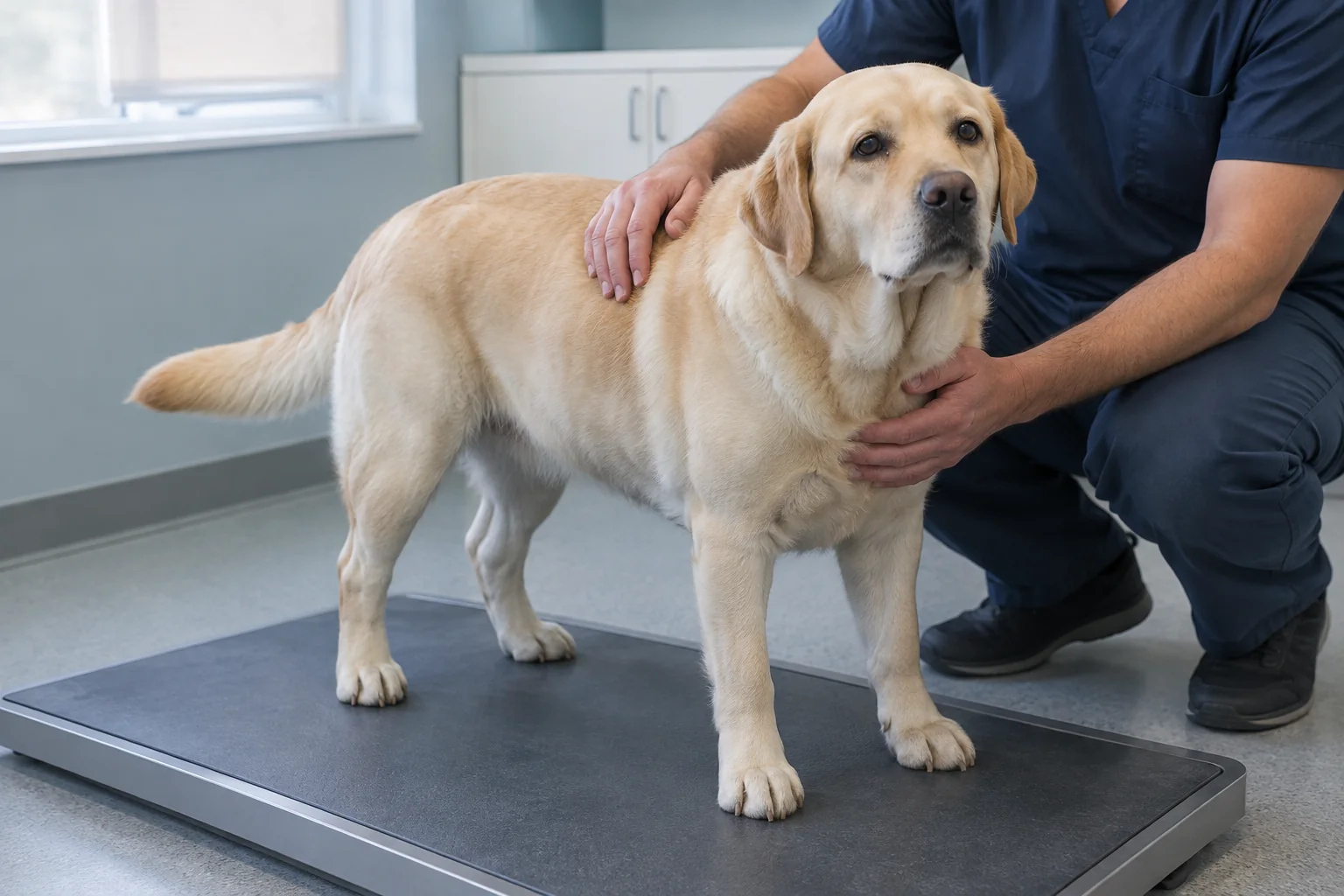
Nutrition at every life stage
We offer personalised nutrition guidance and weight-management programmes for dogs and cats. A growing pet, an adult and a senior need different amounts, so our advice changes with age.
- Feeding your puppy or kitten
- Adult dogs and cats
- Senior pet care for older pets
- Pets on a therapeutic diet
5th
vital assessment
Veterinary guidelines call nutrition the fifth vital assessment, a routine check alongside temperature and pulse, and we discuss it at every first visit.
Is your dog or cat overweight?
Your dog or cat is overweight if it scores above ideal on a body condition score, a 9-point scale our veterinarians use to rate body fat by look and feel. Around 4 or 5 is ideal, and each point above is roughly 10% extra weight.
At a healthy weight:
-
The ribs are easy to feel under a slight layer of fat.
-
From above, a waist shows behind the ribs.
-
From the side, the belly tucks up.
Between 10% and 20% over ideal is overweight; over 20% is obese.
Obesity in dogs and cats: the health risks
Like many areas of B.C., pets in Chilliwack and the Fraser Valley can commonly experience issues related to obesity, and we tailor each plan to the individual pet's lifestyle and needs. Excess weight raises the risk of osteoarthritis and other joint disease, of diabetes (especially in cats), and of a shorter, lower-quality life. Because it strains joints, weight management is part of our arthritis and pain management.
When weight change needs a medical check first
At Promontory Animal Hospital, a pet with unexplained weight change is examined before its food changes, because illness rather than food can be the cause. Where the exam points that way, we run in-house blood work, part of our blood work and diagnostics.
-
Your pet gains weight on the same food.
-
Your cat loses weight but acts normally.
-
Your dog or cat stops eating.
-
A cat eating little or nothing for a day needs same-day care.
Our nutrition and weight process
One examination starts the plan:
- 01
Examination and body condition score
We weigh your pet, score its body condition and review its food and treats. The visit runs like a wellness exam, with the focus on weight and diet.
- 02
Checking for a medical cause
If the history or exam points to illness, we look for it first.
- 03
A target weight and a safe pace
We set a target weight, a safe pace and a daily amount based on your pet's ideal weight, not its current one.
- 04
A feeding plan and re-checks
You leave with a feeding plan. Re-checks are usually every two to four weeks while a pet is losing weight.
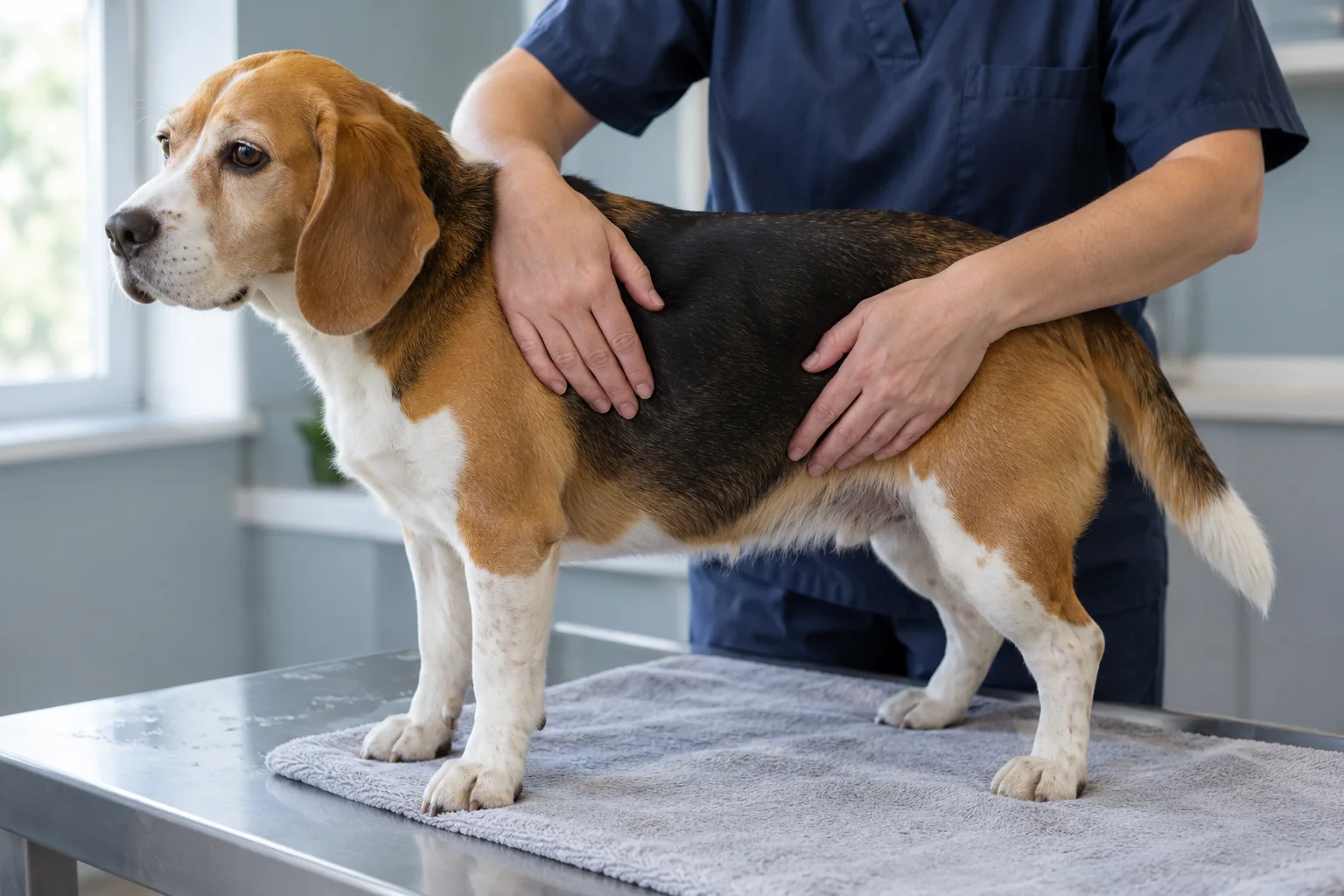
Dog weight loss: a target and a safe pace
For dogs, our veterinarians set a target weight and a safe pace of about 1% to 2% of body weight a week.
At that pace most dogs take months to reach their target, and we adjust the daily amount at each re-check. Regular walks help, built up gradually to protect your dog's joints.
- A target weight
- About 1% to 2% of body weight a week
- The daily amount adjusted at each re-check
- Walks built up gradually
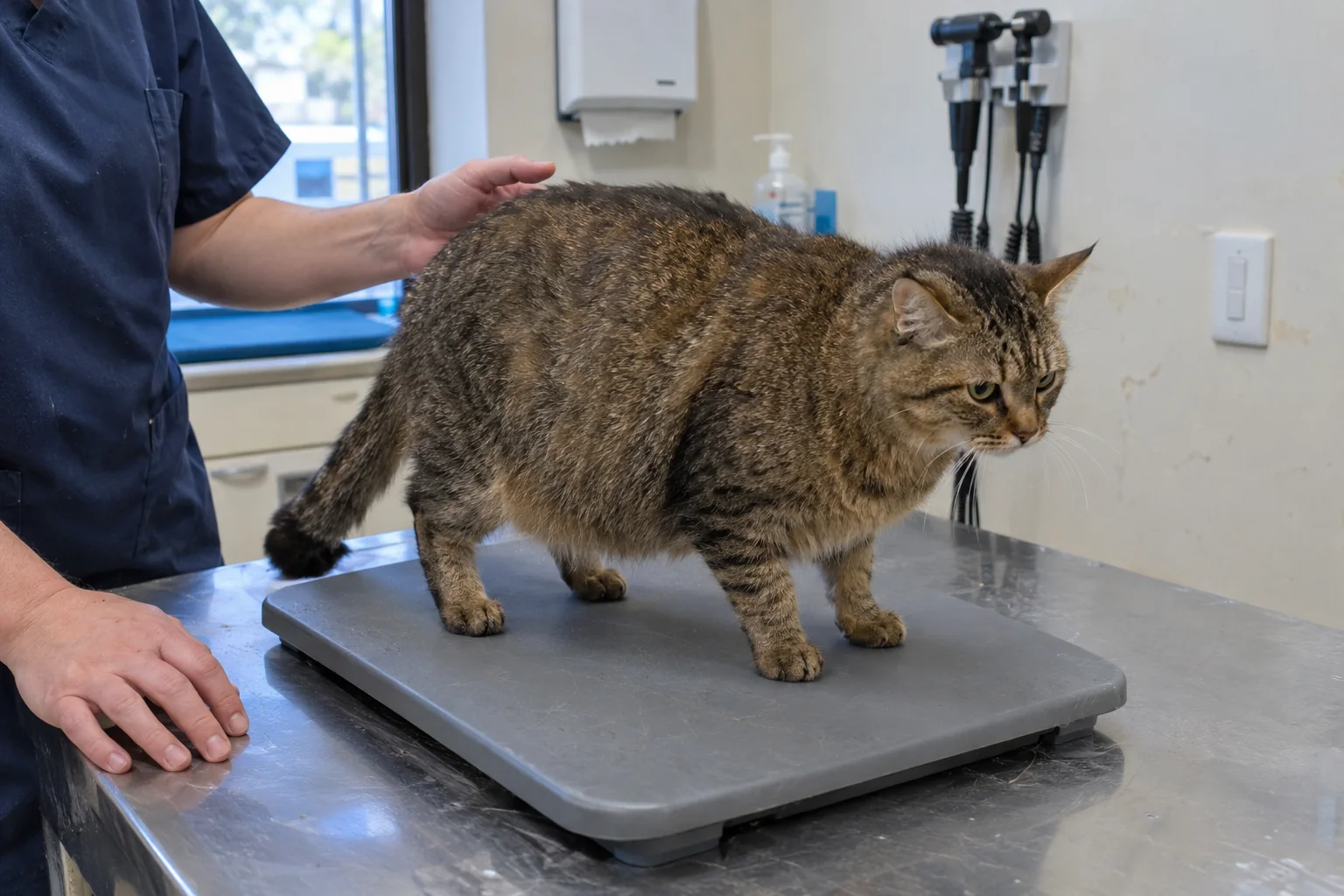
Cat weight loss: why cats must lose weight slowly
At Promontory Animal Hospital in Chilliwack, we treat cat obesity slowly, aiming for a loss of about 0.5% to 2% of body weight a week. We never starve or fast a cat to make it lose weight, because a cat that eats too little can develop fatty liver disease (hepatic lipidosis), a serious illness.
Food puzzles, play and climbing help your cat move more.
- A slow, steady loss
- Never starved or fasted
- Food puzzles
- Play and climbing
Therapeutic diets: when food is part of treatment
Whether your pet needs one depends on the examination, and when we recommend one, we explain why.
What a therapeutic diet is
A therapeutic diet is made for a condition such as kidney disease, or for weight loss. It is available through a veterinarian and is sometimes called prescription dog food. We also run food allergy and diet trials for pets that may react to food.
Where to get one
We dispense these diets from our full in-house pharmacy, which also handles refilling a therapeutic diet.
Feeding, portions and treats
Most of a weight plan happens at home, from measuring food to handling begging:
- Weigh dry food on a kitchen scale; a measuring cup is less accurate.
- Keep treats under 10% of daily calories.
- Count every treat and table scrap, from everyone in the household.
- Begging is often a bid for attention, so offer play or a walk.
- Switch foods gradually, over at least a week.
After a spay or neuter, calorie needs drop while appetite can rise, so portions usually come down. Extra weight is easy to miss on a pet you see every day.
Our Chilliwack clinic and the areas we serve
We are at Unit 104 – 46193 Thomas Road, Chilliwack, and see dogs and cats from:
- Chilliwack
- Sardis
- Promontory
- Vedder
- Yarrow
- Surrounding Fraser Valley communities
We are open 8:00am to 8:00pm, seven days a week. We are accepting new clients and offer same-day appointments. Start by registering as a new client.
How much does a nutrition and weight visit cost?
The cost depends on the examination, which decides whether blood work or a therapeutic diet follows.
A written estimate first
We give you a written estimate you approve before any procedure begins.
Ways to pay
We accept Visa, Mastercard, American Express, Interac debit and cash; see our payment and financing options.
Pet insurance
We accept pet insurance. We provide the invoices and documentation you need to submit your claim. Trupanion, Petsecure, Fetch and Pets Plus Us are insurers we work with.
Explore more of our services
Pet dental care
Cleanings, dental X-rays and extractions for dogs and cats.
Dog and cat dental cleaningDiagnostics & imaging
Digital X-ray and in-house diagnostics to find what hurts.
Pet X-ray and diagnosticsPet vaccinations
Core and lifestyle vaccines for dogs and cats.
Dog and cat vaccinationsParasite prevention
Protection from fleas, ticks, heartworm and intestinal worms.
Flea, tick and worm preventionCommon questions about pet nutrition and weight
Call 604-426-1057Reviewed by our veterinarians, Dr Gurpreet Kaur, DVM, and Dr Ravinder Singh, DVM.
How much should I feed my dog?
No single amount suits every dog, and the feeding guide on the bag is only a starting point. Our veterinarians set a daily amount for your dog's target weight and adjust it at each re-check.
How much should I feed my cat?
Our veterinarians set your cat's daily amount, fed as measured meals across the day rather than from a bowl that is always full. Any cut in food is gradual, because eating too little can make a cat ill.
Why is my cat losing weight?
A cat that loses weight without being on a diet may be ill, even if it is still eating. An overactive thyroid is one common cause. Book an examination with our veterinarians before changing the food.
How long will it take my dog to lose weight?
It depends on how much your dog has to lose, and it usually takes months. The safe pace is about 1% to 2% of body weight a week.
Book a nutrition and weight visit
Bring your pet's previous veterinary records, current food, treats, supplements and medications to the first visit, so we can review them.
What you can count on:
- A written estimate you approve before any procedure begins
- Advice from Dr Gurpreet Kaur, DVM, and Dr Ravinder Singh, DVM
- In-house blood work and a full in-house pharmacy
- Accepting new clients for dogs and cats