Pet Dental Care
Professional Pet Dental Cleaning & Oral Surgery in Chilliwack, BC
Advanced veterinary dentistry for dogs and cats at Promontory Animal Hospital
Dental disease is one of the most widespread yet preventable health conditions affecting companion animals today. Chronic bad breath, swollen or bleeding gums, fractured teeth and changes in eating habits are clear warnings that your pet is experiencing oral pain or an active infection.
Protect your pet from chronic oral pain.
- Thomas Road, Chilliwack
- Open 8:00am–8:00pm, 7 days a week
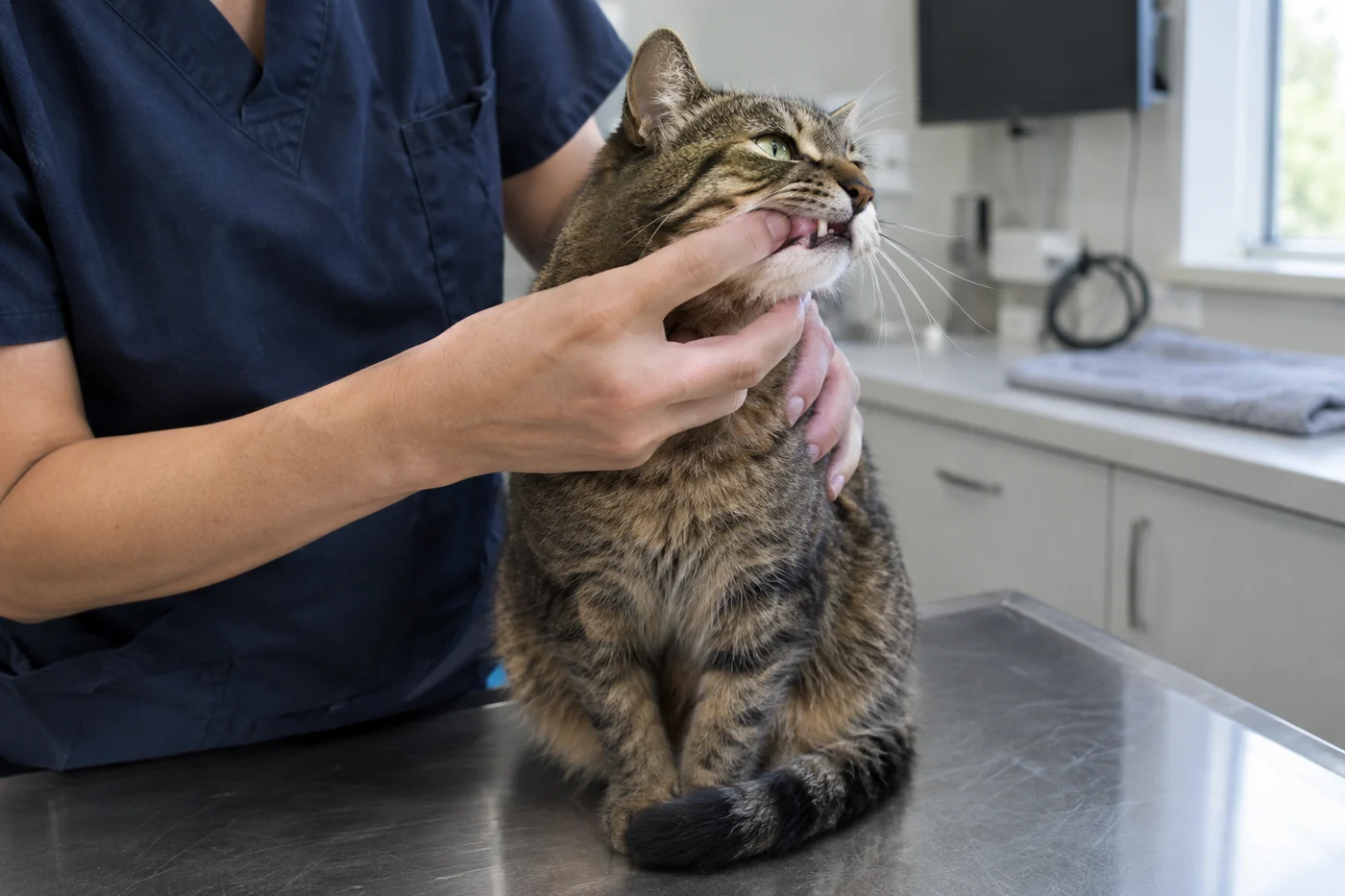
Advanced dental care, from a routine clean to oral surgery
At Promontory Animal Hospital, we deliver high-standard veterinary dental care for dogs and cats across Chilliwack, Sardis, Garrison Crossing and the greater Fraser Valley region. Our comprehensive services range from preventative ultrasonic scaling and polishing to full-mouth digital X-rays, complex tooth extractions and oral surgery.
- Ultrasonic scaling and polishing
- Full-mouth digital dental X-rays
- Complex tooth extractions
- Oral surgery for dogs and cats
60%
of every tooth sits below the gumline
Because over 60% of every tooth lies hidden beneath the gumline, our experienced veterinary team evaluates each tooth individually using digital dental radiography to diagnose painful hidden conditions before they compromise your pet’s health.
Recognised symptoms of pet dental disease
Dogs and cats instinctively conceal oral discomfort. By the time noticeable symptoms appear, significant periodontal disease, root damage or bone loss may already be present.
-
Halitosis: Persistent, severe bad breath. Bad breath in dogs and cats is usually the first thing owners notice, and cat bad breath is just as telling.
-
Calculus accumulation: Visible yellow or brown tartar built up along the teeth.
-
Gingivitis: Red, swollen or bleeding gums along the tooth line.
-
Altered eating habits: Chewing on one side, dropping food, or eating cautiously.
-
Dietary avoidance: A sudden refusal to chew hard kibble, treats or toys.
-
Physical trauma: Broken, chipped, discoloured or loose teeth — a dog broken tooth needs to be seen.
-
Facial asymmetry: Unexplained swelling beneath the eyes, the jawline or the cheeks.
-
Oral distress: Pawing at the face, a dog drooling excessively, or blood-tinged saliva.
-
Behavioural shifts: Lower energy, irritability, or cats hiding and keeping to themselves.
If you notice any of these warning signs, a professional veterinary dental assessment is important to restore your pet’s comfort and health.
What a dog or cat dental cleaning involves
A veterinary dental — proper teeth cleaning for dogs and cats — is far more than scraping off the tartar you can see. It lets us examine the whole mouth, including the parts that cannot be checked while a pet is awake.
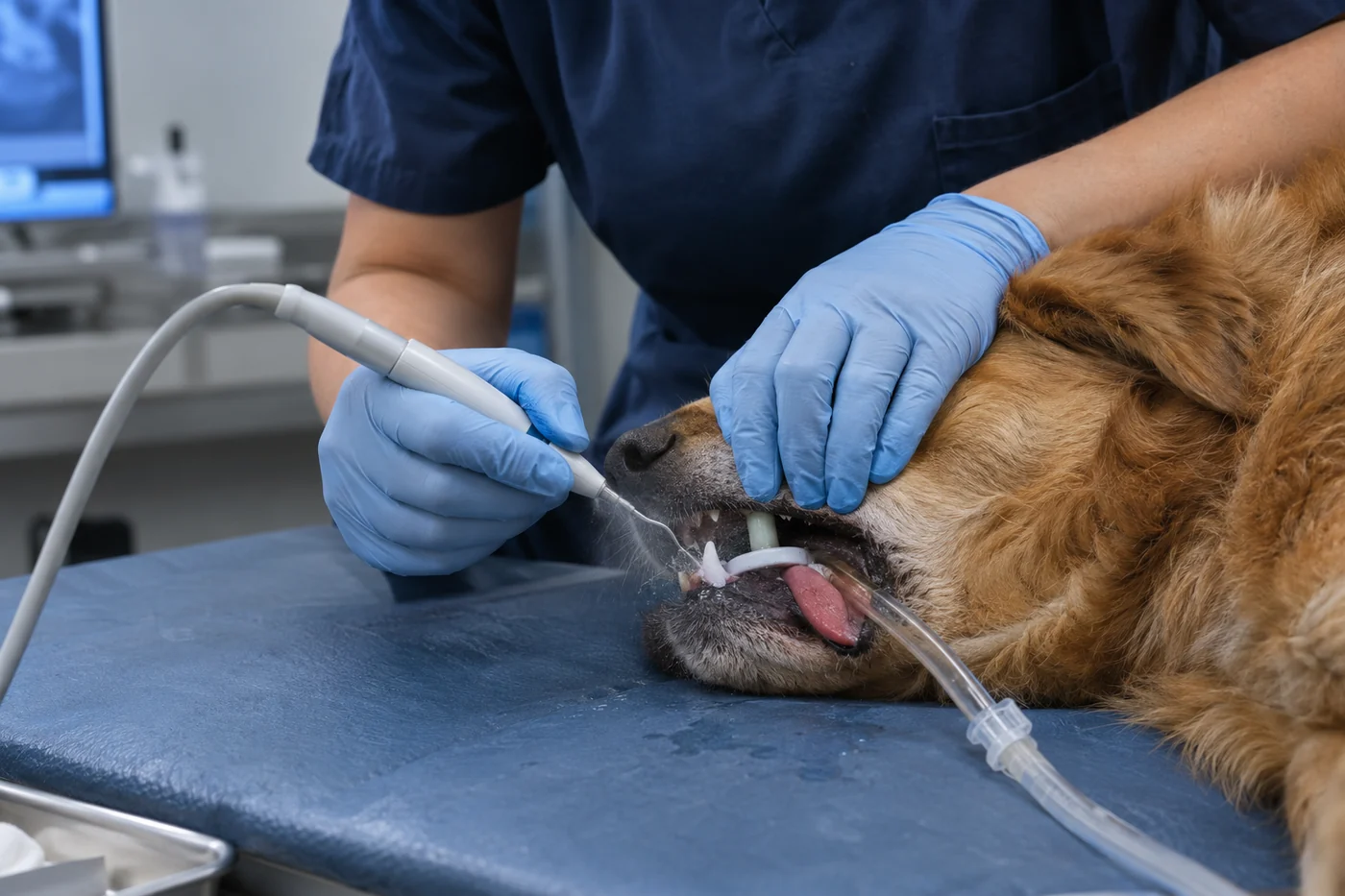
Why it has to be done under anaesthetic
The dental disease that matters usually develops below the gumline, and to check there the veterinarian has to probe around each tooth, take X-rays, and clean under the gum — none of which can be done thoroughly or comfortably on an awake dog or cat. Anaesthesia is what makes a professional dental cleaning possible without frightening or hurting your pet. It is not risk-free, and that is exactly why it is planned around each individual patient rather than treated as routine.
Before your pet goes under we run pre-anaesthetic bloodwork, and a team member monitors them the whole time they are asleep — age alone never rules a pet out, and each one is assessed on their own health. We run teeth cleaning for dogs the same way as cat teeth cleaning.
- Pre-anaesthetic bloodwork first
- Anaesthesia monitored throughout
- Every tooth probed and charted
- Scaling and polishing, above and below the gumline
Dental X-rays, and dental disease in cats
Most of a tooth sits below the gum, so a tooth can look fine while disease develops around its root or in the bone. Dental X-rays let us see what an awake exam never can, and we take the images while your pet is asleep on our in-house digital X-ray.
Cats hide mouth pain especially well, which is why the X-rays matter so much when we assess dental disease in cats — tooth resorption often involves parts of the tooth you cannot see from the outside. A cat teeth cleaning is easy to put off for exactly that reason.
- Bone loss around a tooth
- An abscess at the root
- A cracked or fractured root
- Tooth resorption in cats
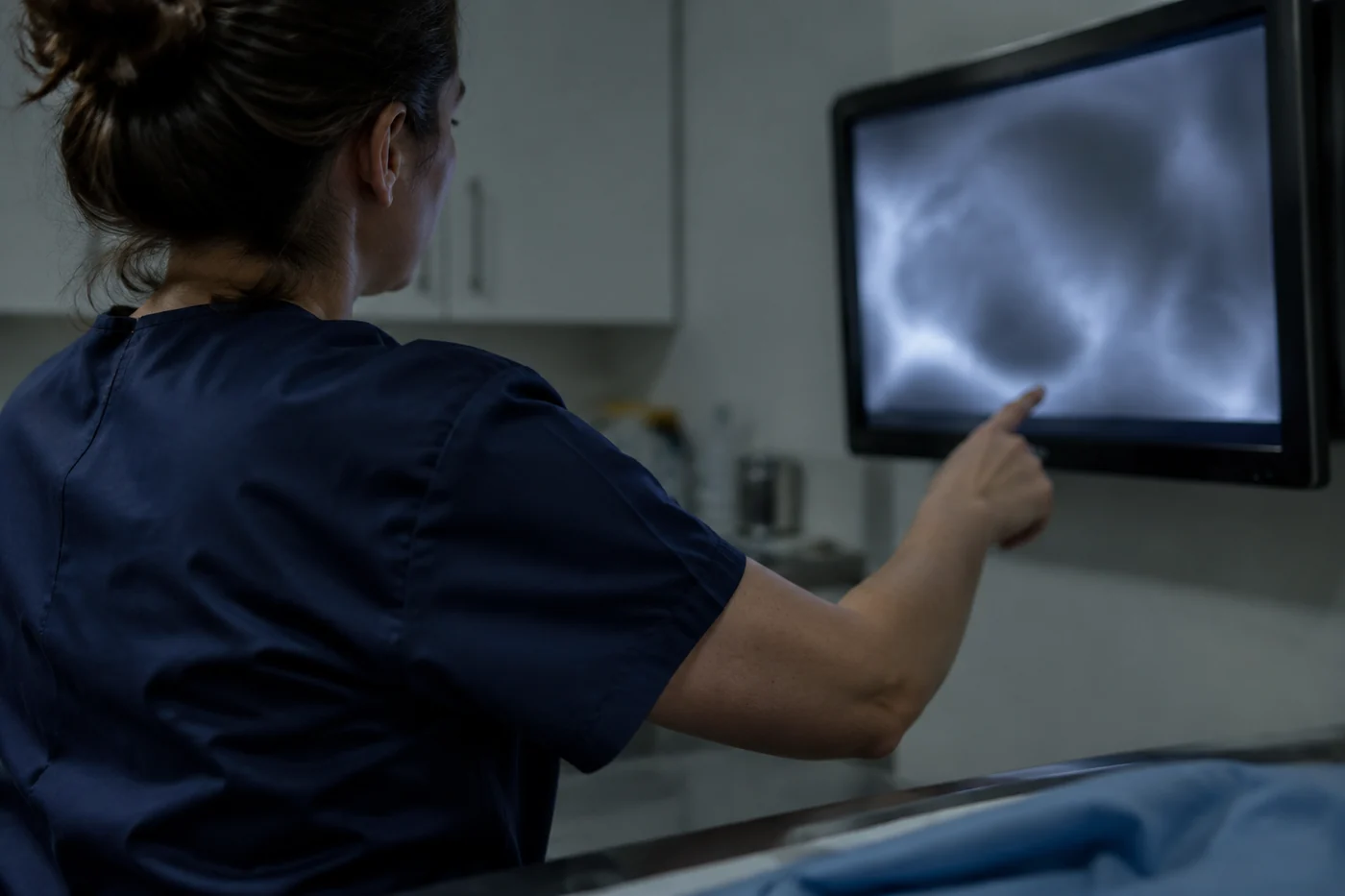
What if the X-rays show something we were not expecting?
We will not pull teeth without you knowing. The full extent of dental disease is not always visible at the awake exam — a tooth can look acceptable and still show real disease once it is probed and X-rayed.
That is exactly what the written estimate is for. Before the procedure we talk through the expected treatment and give you a written estimate to approve, and it covers what we would do if the X-rays turn up more than we expected — so the plan is agreed with you up front. In more involved cases, treatment is sometimes staged across visits rather than pushed into one long anaesthetic. Our aim is that you understand why a tooth needs treatment, not that you are handed a bill full of unfamiliar dental terms.
Dental care we do in-house, and when a case needs more
For routine dog and cat dental care, we are set up to do it all here — your pet is not sent elsewhere for the X-rays or the extractions, and when it is right for the patient the diagnosis and treatment are completed under the same anaesthetic.
Performed in-house
- Professional dog teeth cleaning
- Professional cat teeth cleaning
- Full-mouth digital dental X-rays
- Dental examination and charting
- Scaling above and below the gumline
- Tooth polishing
- Dog tooth extraction
- Cat tooth extraction
- Routine oral surgery
- Pre-anaesthetic assessment and bloodwork
- Pain management when medically indicated
When a case needs more
Because it is all here, most dental problems can be diagnosed and treated in the same visit when that is right for the patient.
If a case needs care beyond what belongs in general practice, we talk to you about referral rather than treating every mouth as if it were the same.
What happens, from the first exam to going home
- 01
The exam, while your pet is awake
A dog dental exam — the same exam for a cat — comes first. It shows the visible tartar, gum inflammation and damaged teeth and tells us where to begin. It cannot show what is below the gumline, which is why the rest of the day matters.
- 02
Bloodwork, then asleep
We run the pre-anaesthetic assessment and bloodwork — age alone never decides this, and older pets are assessed as individuals. Then, under monitored anaesthetic, we probe and chart every tooth and take full-mouth X-rays to see beneath the gum.
- 03
Clean, and treat what needs it
Plaque and tartar come off above and below the gumline, then the teeth are polished — polishing smooths the tiny scratches scaling leaves behind, so plaque finds it harder to cling on again right after the clean. If a tooth is badly diseased, damaged or painful, removing it may be the right treatment — decided from the exam and the X-rays, and done under the same anaesthetic.
- 04
Home the same day
We go through what we found — what was healthy, what we treated, what to keep an eye on. Most pets go home the same day, once recovered from the anaesthetic, with discharge instructions and any prescribed pain relief.
How is dental pain managed?
Dental disease can hurt on its own, and treatment like an extraction needs proper pain control too. The exact plan depends on your pet and what was done. When your pet goes home, we send any prescribed pain relief with instructions on how to give it and what to expect while they recover.
If you are worried about discomfort after an extraction, ask us before the procedure — we would rather walk you through the pain-management and recovery plan beforehand than leave you wondering.
When is a pet dental problem urgent?
Some dental problems should not wait for a routine cleaning appointment. Contact us promptly, and urgent dental care runs inside our hours — we are open 8:00am to 8:00pm, seven days a week.
-
Facial or oral swelling
-
Significant bleeding from the mouth
-
Sudden difficulty eating, or a sudden inability to eat or drink normally
-
A fractured tooth with the inner pulp exposed
-
Severe or obvious mouth pain, or a sudden major change in behaviour linked to mouth pain
Promontory Animal Hospital provides urgent veterinary care during our regular hours — we are open 8:00am to 8:00pm, seven days a week. We are not a 24-hour hospital, so overnight a pet in real trouble needs an emergency hospital that is open then.
Can you see my pet today?
8am–8pm
Open seven days a week
Promontory is not a 24-hour hospital; outside those hours a pet in trouble needs an emergency hospital.
Accepting new clients for dogs and cats
Searching for dog teeth cleaning near me from Sardis, Promontory, Vedder, Yarrow or the wider Fraser Valley? We are on Thomas Road in Chilliwack.
How much does a pet dental cleaning cost in Chilliwack?
The cost of a dog dental cleaning or a cat dental cleaning depends on the individual pet and the condition of the mouth. A pet with mild tartar and healthy teeth may need a relatively straightforward cleaning; a pet with advanced periodontal disease, fractured teeth, infected roots or several teeth requiring extraction may need a more involved procedure. Because a dog teeth cleaning cost follows the mouth in front of us, a single flat price for every pet dental procedure can be misleading.
A written dental estimate first
Before treatment begins, we discuss the expected procedure and give you a written estimate to approve. If dental X-rays identify additional disease, we explain the findings and discuss the recommended treatment.
We accept pet insurance
Pet insurance dental coverage varies between insurance companies and individual policies. We provide the invoices and documentation you need to submit your claim to your insurance provider.
Financing is available
Financing options may be available for eligible clients. Ask our team about the available options when we go through your pet’s dental treatment.
How to prevent dental disease at home
Professional veterinary dental care is only one part of maintaining your pet’s oral health. Daily dental care at home can help reduce plaque between professional cleanings. Depending on your pet, home-care options may include:
- Daily brushing with pet-safe toothpaste
- Veterinary dental diets
- Dental wipes
- Dental chews
- Products carrying the Veterinary Oral Health Council (VOHC) seal
Not every dental product is appropriate for every pet. Our veterinary team can help you choose an oral-care routine that is safe and practical for your dog or cat. Starting a dental-care routine early can make regular brushing and professional dental examinations easier as your pet gets older.
Pet dental cleaning near you in Chilliwack
Promontory Animal Hospital provides dog dental care and cat dental care for families throughout Chilliwack and the surrounding Fraser Valley. Our veterinary hospital is on Thomas Road in Chilliwack and serves pet owners from:
- Chilliwack
- Sardis
- Promontory
- Vedder
- Yarrow
- and surrounding Fraser Valley communities
If you are searching for dog teeth cleaning near me, cat dental cleaning near me, or pet dental cleaning in Chilliwack, our veterinary team can assess your pet and recommend the appropriate next step.
Explore more of our services
Diagnostics & imaging
Digital X-ray and in-house diagnostics to find what hurts.
Pet X-ray and diagnosticsPet vaccinations
Core and lifestyle vaccines for dogs and cats.
Dog and cat vaccinationsParasite prevention
Protection from fleas, ticks, heartworm and intestinal worms.
Flea, tick and worm preventionEmergency & urgent care
Same-day help for sick and injured pets during our open hours.
Urgent care for your petQuestions owners ask before booking a dental
Call 604-991-2745Reviewed by our veterinarians, Dr Gurpreet Kaur, DVM, and Dr Ravinder Singh, DVM.
Do I need a specialist dog or cat dentist?
Not necessarily. Routine dental care for dogs and cats can usually be provided by a general-practice veterinarian with appropriate dental equipment, dental X-ray capabilities and monitored anaesthesia — you do not need a specialist dog dentist for routine care. Our veterinary team can perform routine dental cleanings, dental radiographs and many tooth extractions in-house. If your pet’s condition requires specialised dental expertise or advanced treatment beyond the scope of general practice, we will discuss appropriate referral options with you.
Is anaesthesia safe for an older dog or cat?
Age alone does not prevent a pet from undergoing anaesthesia. Senior pets are assessed individually based on their medical history, physical examination and pre-anaesthetic testing. Anaesthesia is not risk-free, but appropriate planning and continuous monitoring help minimise the potential risks.
Is anaesthesia-free teeth cleaning an option?
A comprehensive veterinary dental procedure requires more than removing visible tartar. Anaesthesia allows the veterinary team to clean below the gumline, take dental X-rays, and assess the teeth and the surrounding structures. For this reason, anaesthesia-free cleaning does not provide the same diagnostic or therapeutic benefits as a professional veterinary dental procedure, and it is not a substitute for a professional dental cleaning done under anaesthesia.
Will my pet need teeth removed?
Not every dental cleaning means taking out teeth. We always start with a full examination, probing and digital X-rays to see exactly what is happening above and below the gumline. Healthy teeth stay right where they are. If we find a tooth that is severely damaged, infected or causing pain, removing it is usually the kindest choice to keep your pet comfortable and healthy. We will always talk you through our findings before proceeding, and we make sure your pet goes home with full pain relief for a smooth recovery.
Does my cat need dental care too?
Yes. Dental disease is not just a dog problem. Dental disease in cats includes periodontal disease, fractured teeth and tooth resorption, and cats hide mouth pain extremely well — often the only sign is eating differently or going quiet. Cat dental health is easy to overlook, which is why dental X-rays matter: real disease can sit below the gumline even when a tooth looks fine. We provide cat dental care on the same equipment we use for dogs.
Schedule a pet dental examination in Chilliwack
If your dog or cat has persistent bad breath, tartar, red or bleeding gums, difficulty chewing, a damaged tooth or changes in eating behaviour, schedule a veterinary dental examination. At Promontory Animal Hospital we evaluate the whole mouth — not just the teeth you can see. Call 604-991-2745 or use the contact form. We are at Unit 104 – 46193 Thomas Road, Chilliwack.
What you can count on
- Open 8:00am to 8:00pm, seven days a week
- A written estimate you approve before any procedure
- Dental X-rays, cleaning and extractions all in-house
- Accepting new dog and cat clients